German weapons
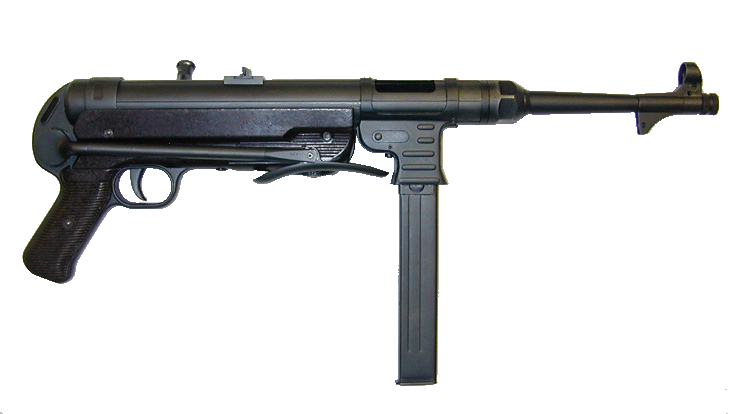
The MP 38 and MP 40 (MP designates Maschinenpistole, literally "Machine Pistol") were submachine guns developed in Nazi Germany and used extensively by paratroopers, platoon and squad leaders, and other troops during World War II. The MP 40 was characterized by its relatively low rate of fire and recoil.

The MG 42 (shortened from German: Maschinengewehr 42, or "machine gun 42") is a 7.92mm universal machine gun that was developed in Nazi Germany and entered service with the Wehrmacht in 1942. It supplanted and in some instances, replaced the MG 34 general purpose machine gun in all branches of the German Armed Forces, though both weapons were manufactured and used until the end of the war
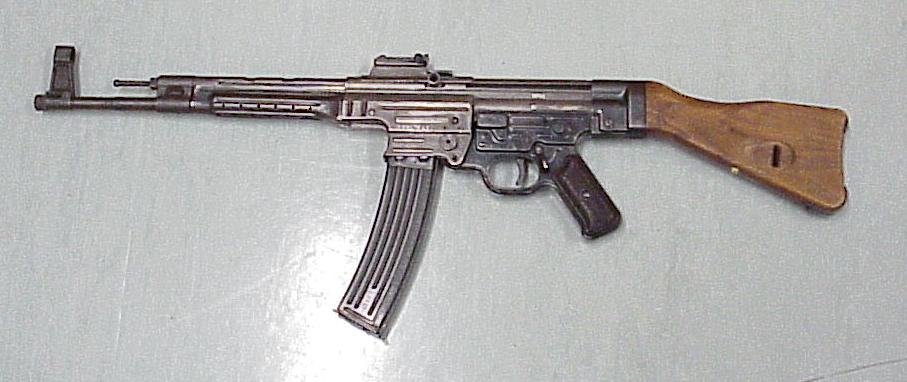
The StG 44 (Sturmgewehr 44 or "assault rifle model 1944") was an assault rifle developed in Nazi Germany during World War II and was the first of its kind to see major deployment, considered by many historians to be the first modern assault rifle. It is also known under the designations MP 43 and MP 44.
Japanesse weapons

The Arisaka Rifle was designed by Colonel Nariakira Arisaka (1852 - 1915), who was later promoted to Lieutenant General and also received the title of baron from Emperor Meiji, in 1907. Several productions runs were made, with later models being made more cheaply, for example the ovoid bulb-shaped bolt of earlier runs was replaced by a smaller and utilitarian cylindrical shape.
Designed and built by the Nambu Arms Manufacturing Company, the Type 100 was a robust, if unremarkable, submachine gun that was first delivered to the Imperial Army in 1942. Japan was surprisingly late to introduce the submachine gun to its armed forces.
The Type 100 was a well made gun, but the 8x22mm Nambu round was underpowered, roughly the equivalent to the .380 ACP. Atypically for a submachine gun but typical of Japanese small arms, a bayonet lug was fixed under the barrel.
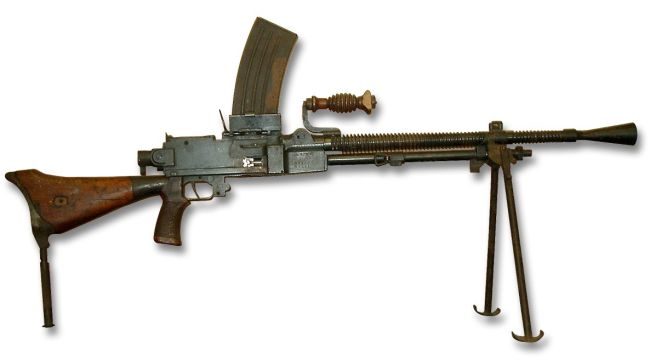
The Type 99 was basically the same design as the Type 96 light machine gun, and had a number of parts in common. However, it dispensed with the oiler and had better primary extraction, increasing reliability over its predecessors. Early models had a mono-pod at the stock and a flash suppressor on the muzzle, which was screwed onto a threaded portion of the gun barrel. A top-mounted curved detachable box magazine held 30 rounds, and the finned gun barrel could be rapidly changed to avoid overheating.
